Edward Yang’s States of Flux
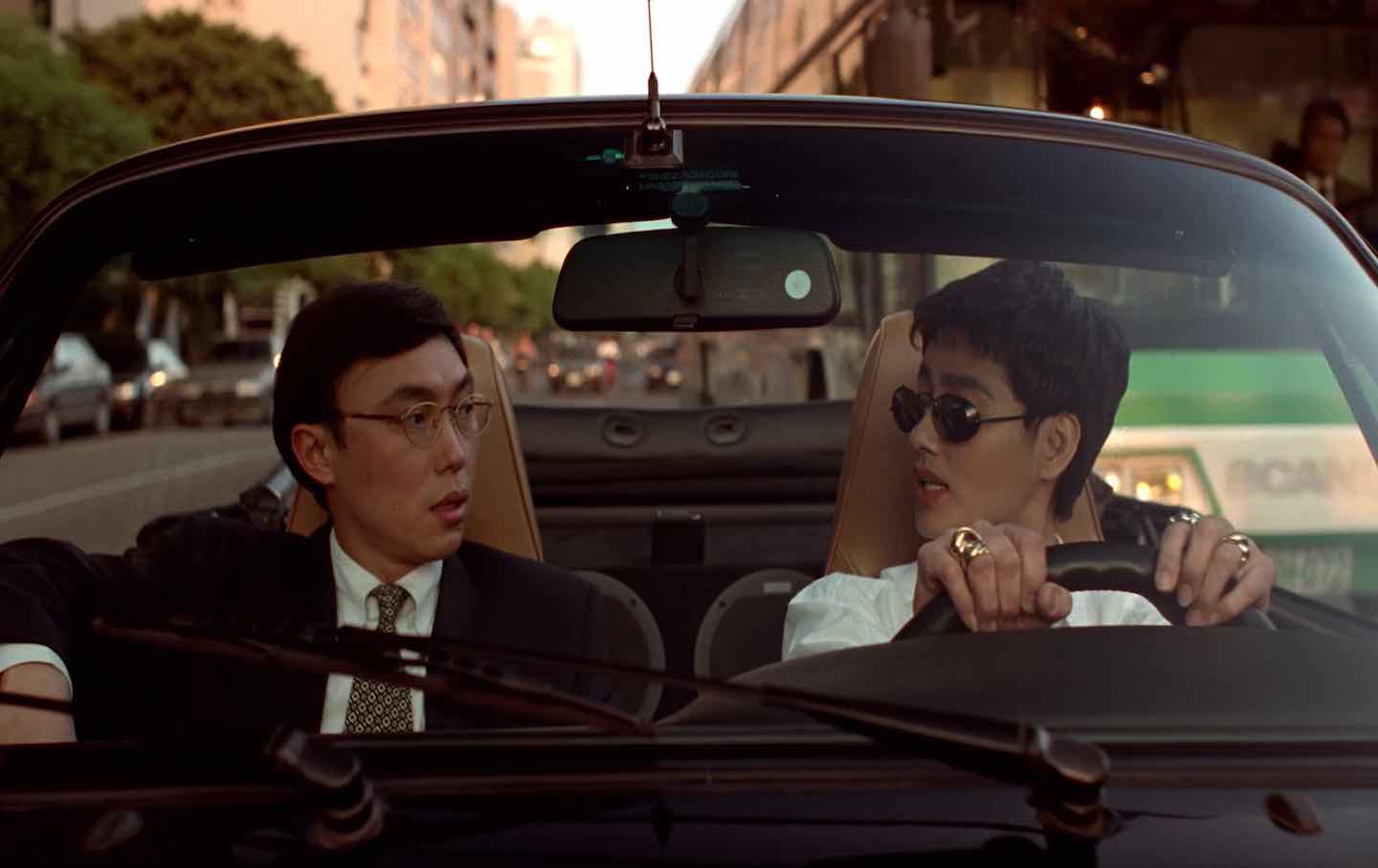
Books & the Arts / January 11, 2024 His murky comedies and family dramas of lifestyles in leisurely-Twentieth-century Taiwan depict a generation’s disaster, confronting the forces of finance and globalization. A scene from Confucian Confusion. (Courtesy of Janus Movies) Taiwan’s quick, unprecedented financial boost within the latter half of of the Twentieth century profoundly altered

Books & the Arts / January 11, 2024
His murky comedies and family dramas of lifestyles in leisurely-Twentieth-century Taiwan depict a generation’s disaster, confronting the forces of finance and globalization.
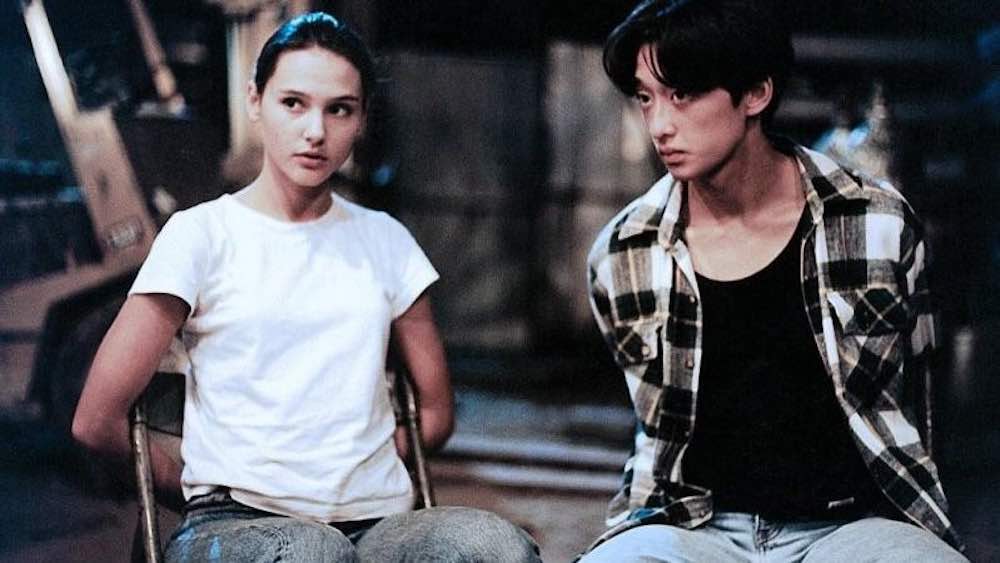
Taiwan’s quick, unprecedented financial boost within the latter half of of the Twentieth century profoundly altered the country’s social constructing and reconfigured the lives of its voters. Director Edward Yang deploys this historical context as the root for his motion images, which depict metropolis malaise amid world capitalism’s expansion of different. In Mahjong (1996), Yang explicates this belief by saturating the film with white, English-speaking characters, all of whom glimpse Taipei, the director’s birthplace and cinematic dwelling turf, as an exotic land ready to be bled dry of its wealth. Marthe (Virginie Ledoyen), a young French lady, impulsively travels to Taiwan to reunite along side her extinct paramour, Markus (Nick Erickson), a British entrepreneur whose failures in England non-public led him to witness out new markets in Asia. When Markus reacts obnoxiously to Marthe’s unexpected arrival, she spitefully decides to take care of within the country and falls in with a gang of 4 young Taiwanese con artists. Their promises of safety thinly camouflage their desire to pimp her out to an American who runs a well-liked escort provider.
Yang portrays mid-Nineteen Nineties Taipei as an unfettered new frontier where folks’s wayward needs and newly deep pockets are ripe for exploitation. (“No one knows what they need” is the habitual, gleeful chorus of Mahjong’s young gangsters.) Whereas the Western émigrés mine the country’s burgeoning financial system for deepest create the usage of shady—albeit technically trusty—procedure, the gang takes fair correct thing about their very non-public countrymen’s superstitions and non secular beliefs. Transactional relationships reign supreme in Mahjong: Everyone is either a con man or a stamp, predator or prey, packed into a country where capital’s relationship to energy has been laid naked.
Hence, intimacy of any model remains a refuge for the traditionally sentimental, which the young, nouveau riche Taiwanese desire to shed from their nationwide identification. Below the sway of maximum cupidity, romantic relationships are merely probably traps. Gang member Hong Kong (Chang Chen) makes exhaust of his sexual prowess to lure females into mattress, both as an indication of his energy and to bellow their very non-public praises to his crew. In an seriously nasty scene, a new, gullible lover discovers that any lady who needs to live in Hong Kong’s real graces have to sleep with the complete gang. His emotional distance torments his companions; he refuses to kiss them, as he and the crew factor in it’s unhealthy success to level such vulnerability. It’s only when a community of older females desire to pass Hong Kong spherical luxuriate in a plate of canapés, luxuriate in the gang does along with his paramours, that he collapses into a puddle of humiliated tears, in some procedure feeling the emotional stamp of such objectification.
Within the intervening time, the effects of unchecked greed trickle down via generations lawful as without say as completely different lessons. Two mobsters belief to kidnap Crimson Fish (Tang Tsung-sheng), the gang’s cocky chief, in elaborate to blackmail his prosperous businessman father into paying attend an limitless loan. Crimson Fish’s father, who hides out from the mob in a secret admire nest, confesses that every one he pines for is what money can’t aquire, now that his investments non-public soured. Young and smug, Crimson Fish dismisses these starry-eyed platitudes and argues that they merely intervene along with his father’s avarice; he only begins to fully comprehend his father’s warnings after it’s too leisurely.
It’s Luen-Luen (Lawrence Ko), the gang’s softhearted driver and translator, who slowly sees the dehumanization inherent in this form of hyper-capitalist daily life. Born into a modest family that rents rooms to expats, Luen-Luen feels lawful as lost amid the rampant upheaval in his non-public country as Marthe does with the language barrier. As the 2 forge a bond after Luen-Luen informs her of the intercourse-work yell, they finally bring together themselves standing against the deceitful, amoral masses who wear smiles and appear affable. It’s telling that undoubtedly one of the well-known few two-confronted phrases Crimson Fish can advise in English is “OK! No design back!,” which is something he repeats to the oldsters he’s actively attempting to con.
A new restoration of Mahjong made its world premiere throughout Lincoln Heart’s profession retrospective of Yang’s work; it screened alongside a new restoration of his other mid-’90s film, A Confucian Confusion (1994). Sandwiched between A Brighter Summer time Day (1991) and Yi Yi (2000)—two broadly acclaimed legend family dramas replete with a myriad of operatic incident—this pair of underseen ensemble comedies characteristic the leisurely Taiwanese director at his angriest, funniest, and most cynically romantic. They both exhaust immense, interconnected ensemble casts and the visual language of farce to extra explore Yang’s abiding thematic arena: an ever-altering Taiwan stuck between tradition and Western-influenced modernity.
Most up-to-date Discipline

A Confucian Confusion and Mahjong additionally symbolize two of the remaining pieces within the well-liked auteur’s oeuvre to bag a belated stateside highlight since his loss of life in 2007. Yang came to filmmaking slightly leisurely, after spending the first half of of his lifestyles within the United States striking his electrical engineering levels to work within the tech sector while flirting with other careers. He used to be temporarily enrolled within the College of Southern California’s film college before deciding that its industrial pedagogy used to be no longer for him; he used to be additionally licensed into the Harvard Graduate College of Produce but determined no longer to attend.
Yang finally returned to Taiwan in 1980 and helped pioneer a new wave of nationwide cinema that sought to bring life like portraits of contemporary Taiwanese lifestyles to the immense veil. By the ’80s, the Taiwanese film commerce used to be in a yell of flux—its “virtual give procedure,” per Peek & Sound’s Tony Rayns, “compelled a director-led cinema into being,” and would-be auteurs had to radically change “producers, production managers, acting coaches, editors and unit publicists.” Yang and his peers grew up below the oppressive, conservative orthodoxy enacted by the Kuomintang political regime; they channeled their rebellious attitudes, which had been emboldened by American culture trickling into the country, into their work. In his motion images, Yang illustrated how metropolis lifestyles had radically change a microcosm for the globe folding in on itself, except East and West radically change mirrors of every and every other, with every person within the center compelled to model out the identification disaster for themselves.
The characters in Mahjong casually frequent imported chain though-provoking locations luxuriate in the Laborious Rock Café and TGI Friday’s, symbols of globalism that radically change, once the sun items, locations of off-hours industry or sites of chanced on and step by step curdled admire amid a immense metropolis’s vivid lights. Nonetheless in A Confucian Confusion (1994), which treads an identical ground as Mahjongthey’re merely the background establishments for the upwardly cell, a community of folks who, in Yang’s eyes, non-public adopted dishonesty as a daily life. Yang traces a posh lattice of relationships between the twentysomething experts working in corporate environments and the humanities to probe the methods that the politicking required to prosper within the attach of commercial bleeds into lifestyles outdoors the attach of job.
In A Confucian ConfusionYang successfully introduces a circle of pals and colleagues whose locus is Molly (Ni Shu-Chun), a burned-out government working a failing PR company. The industry, which basically specializes within the country’s cultural institutions, is propped up by Molly’s buffoonish, prosperous husband, Akeem (Wang Bosen). Her employee and college chum, Qiqi (Chen Shiang-chyi), remains real to Molly and the firm, which causes friction along side her boyfriend Ming (Wang Wei-ming), one other fellow classmate and center-class striver, who believes that a profession within the humanities and financial balance are incompatible.
The film’s farcical yell is sparked in phase by Akeem’s scheming correct-hand man, Larry (Danny Deng), who tries to secure him to halt funding Molly’s industry by contributing to an ongoing rumor that Molly is having an affair. Puny does Akeem know that Larry, whom he considers his biggest buddy, has been actively pursuing Molly on the attend of his attend, while additionally conducting his non-public affair with Feng (Richie Li), a extinct employee of Molly’s and an aspiring actress who has no compunction about the usage of her sexuality to secure forward. The inspiration of “connections” plays a key role in both A Confucian Confusion and Mahjongwhether that procedure industry mates or merely secure admission to to money, because it definitely locations a financial worth on interpersonal relationships. Larry, the most dishonorable character in A Confucian Confusionproudly compares friendships to “long-term investments” when he’s no longer attempting to woo Molly with discuss of how moved he used to be by her financial statements.
Even supposing Yang positions Larry as exceptionally egocentric, all of the characters in A Confucian Confusion exist on the an identical continuum of egotism or hypocrisy, and every relationship is in some procedure transactional: Molly needs Akeem’s money to prop up her industry, Qiqi needs Molly’s firm to take care of afloat, and Larry needs Akeem to factor in that he’s working in his biggest interests so his deception stays concealed. Fancy and friendship are permanently interlinked with careerism and greed except they’re indistinguishable from one one other.
Standard
“swipe left below to ogle more authors”Swipe →
In Yang’s Taiwan, the transactional nature of the industry world exists equally inner the ingenious fields; artwork and commerce non-public always been extraordinary bedfellows, but in A Confucian Confusiontheir limbs are tangled in an impenetrable knot. The film opens with Molly’s inclined buddy and foppish playwright client, Birdy (Wang Wei-ming), pompously extolling the worth of ingenious populism to a community of journalists. Birdy has turned his attend on “postmodern abstraction” and embraced comedy (a reference to Yang’s non-public boost with A Confucian Confusion), claiming that, in a in actuality equal, democratic society, purchasing a mark on the field attach of job is the an identical of balloting. Within the intervening time, Birdy combats accusations of plagiarizing a work by Molly’s brother-in-law (Hung Hung, additionally the coauthor of the film’s screenplay), a extinct romance novelist turned pretentious hermit writing sad treatises on society’s failures.
In Yang’s eyes, both men are absurd figures with opposing temperaments: Birdy, a goof inclined to histrionic suits on the slightest mark of fight, and Hung Hung’s unnamed character, a arrogant, self-indulgent bore who can’t communicate with anybody. Even supposing the film ends with both men breaking out of their respective ruts, Yang refuses to fa cet with either character’s ideology: Neither Birdy’s populist worldview nor the monastic ingenious ideals of Molly’s brother-in-law are deemed the merely victor. In its attach, Yang positions the 2 poles as a fixed fight between industrial appeal and deepest belief that is doomed to remaining forever.
The fills A Confucian Confusion with intertitles that new upcoming snippets of dialogue as within the event that they’re bits of contemporary Confucian wisdom, implying that banal dialog neatly stands in for philosophy. He additionally packs A Confucian Confusion with even more Western accouterments than Mahjong: T-shirts, logos, NBA video games—all of it screams Taipei as a world hub. Nonetheless the metropolis’s identification, Yang argues, has radically change muddled throughout, and the new competitive spirit has sapped it of its sense of neighborhood. No one can trust Qiqi’s sunny disposition, no topic her command sincerity, because it would possibly probably lawful as without say be faked by any individual who needs to rob something from a chum. Forward of Akeem becomes inconsolably jealous on the considered Molly having an affair, he compares their inaugurate relationship to the one between China and Taiwan: “one country, two systems.” In A Confucian Confusionevery person looks to be both very earnest and fully stuffed with it, befitting the nation’s divided soul, a which that chances are you’ll factor in response to the inquire posed by Confucius that opens the film: “What comes next after they’re made rich?”
Mahjong answers that inquire in a more nihilistic style: The film’s attend half of is dominated by scenes of kidnapping, suicide, and a brutal slay, all carried out with future riches or asserting wealth in tips. Yang’s blunter technique here risks monotony, but only because his characters’ needs are slightly slim. His inclusion of European characters is usually a mixed bag, with broadly varied performances, but they undoubtedly present a ogle into how native Taiwanese inquire Western interlopers. (“If this perspective strikes us as irregular and indirect, I’m particular that’s no less the case when Asians glimpse Asian characters in Western motion images,” well-liked Jonathan Rosenbaum in 1997.) If Mahjong resembles a messy crime comedy, that’s because it acutely portrays Taiwan as a messy, violent conflict of languages and competing ideologies, all undergirded by the imperfect shadow of world capitalism.
Admittedly, A Confucian Confusion fares better, if only because Yang’s satiric instincts more readily be triumphant within the film’s strictly expert environments, given his non-public expertise working in an identical milieus in America. Yang and Hung Hung’s consuming script comprises stronger comedy and deeper characterizations, which helps deal with the satire, but it’s worth noting that both motion images live on a comparably bittersweet display veil. In MahjongLuen-Luen and Marthe are reunited in a romantic embody amid the chaos of Taipei’s streets, and while Yang portrays the scene as a if truth be told passionate moment, both remain permanently lost and unmoored, one in his dwelling country and the opposite in her impulsively adopted one.
Within the intervening time, A Confucian Confusion ends with the majority of the film’s couples fractured, along with Qiqi and Ming, who steadily advise to one one more luxuriate in mates attempting to withhold a shaky merger afloat. The two lovingly agree they’re apart, but lawful as they’re about to exit every other’s lives, they judge to present it one more walk. Yang frames the scene luxuriate in the optimistic live of a screwball romantic comedy, but with a murky implication: On this contemporary age, maybe a industry relationship posing as a romantic one is a noble aspiration.
All of Yang’s motion images tread an identical nationwide-identification territory, but the comedic constructing of A Confucian Confusion and Mahjong enabled him to be more overt along with his feelings about the yell of Taiwan. Near the live of MahjongMarkus smugly tells Marthe, “The technique forward for Western civilization lies correct here…. The nineteenth century used to be the fabulous age of imperialism, correct? Appropriate wait except you glimpse the twenty first century.” Yang’s untimely loss of life used to be a blow to world cinema for many reasons, but chief among them is his incapacity to prepare up on such prophetic words.
Vikram Murthy
Vikram Murthi is a Brooklyn-based fully fully critic and a contributing author to The Nation. He additionally editsDowntime Journal,and his freelance work has regarded inFilmmaker Journal,Reverse Shot,Criterion,Vulture,and varied other publications.