What’s So Imperfect About Reconciliation?
Culture What’s So Imperfect About Reconciliation? Herman Melville understood every the horrors of slavery and the bonds between countrymen. Could well presumably quiet he be canceled? There may be a theory of the final destiny of the universe, lesser identified than the “The Massive Bang,” known as “The Massive Crunch.” Developed by Russian physicist Alexander Friedmann

Culture
What’s So Imperfect About Reconciliation?
Herman Melville understood every the horrors of slavery and the bonds between countrymen. Could well presumably quiet he be canceled?
There may be a theory of the final destiny of the universe, lesser identified than the “The Massive Bang,” known as “The Massive Crunch.” Developed by Russian physicist Alexander Friedmann in 1922, it predicts that the growth that began with the Massive Bang will finally attain its limit and the universe will collapse help into itself.
Whereas the burden of most up-to-date evidence is in opposition to it, the conception stays a truly helpful metaphor for inspecting what Charles Mackay called unprecedented standard delusions and the madness of crowds, equivalent to the assumption that spending public funds on the elimination of monuments depicting troopers of the Confederacy—most of which had stood long in obscurity and functioned mainly as perches for pigeons—would come what may perhaps increase the lives of black People.
Cash successfully spent, relate proponents of the circulate, which has resulted in the elimination of over twenty monuments from Florida to California. Whereas right here is clearly the case with memorials to if fact be told injurious males equivalent to the one in Memphis that honored Nathan Bedford Wooded space—first Substantial Wizard of the Ku Klux Klan and a delegate to the 1868 Democratic Nationwide Convention—what about monuments to the tip of slavery and to reconciliation, universally identified as improvements over The usa’s racist previous?
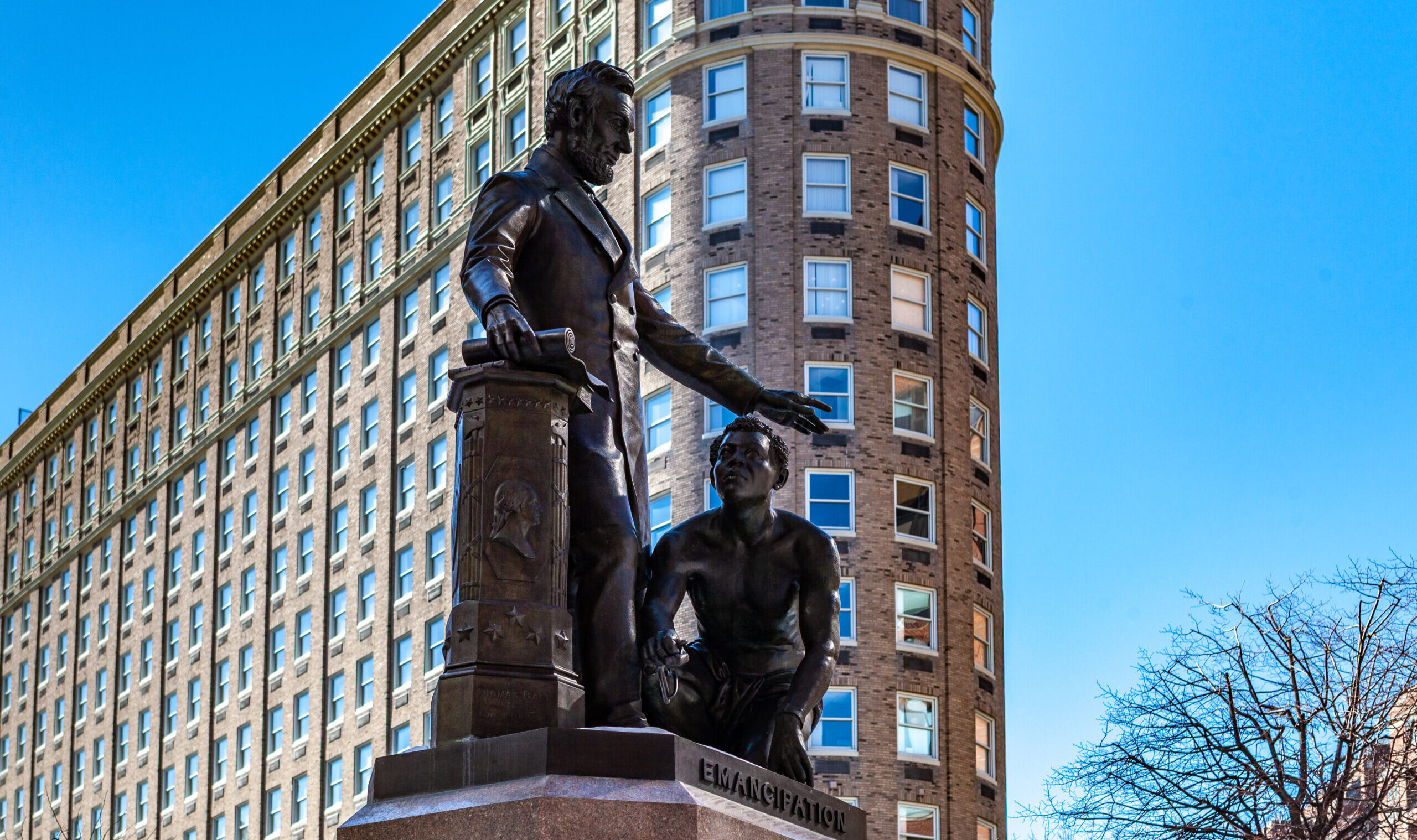
Sorry, they’ve obtained to head too. In Boston, a monument identified as the Emancipation Memorial depicting Abraham Lincoln and a kneeling black man poised to upward push after his chains had been damaged was as soon as removed and placed in storage in December of 2020, even supposing it had been at the beginning funded in 1876 by frail slaves. Abolitionist poet John Greenleaf Whittier wrote a poem for its dedication, and the mayor of Boston praised the statue as “an account lesson to future generations” of the huge act that it commemorated, “the emancipation of four thousands and thousands of slaves!”
There had been quibbles from the basic; Frederick Douglass stumbled on the work “admirable” but noted that it didn’t “mumble the total fact of slavery.” This criticism was as soon as repeated more than a century later, long after the nation had made development in civil rights that Lincoln and Douglass may perhaps well barely delight in imagined; the slave “can by no plan upward push and stand, by no plan attain to consciousness of his delight in vitality,” wrote historian Kirk Savage in 1997, even supposing that is precisely what accurate americans had executed all spherical it, however the static nature of the metallic all over which it was as soon as solid. The sculpture was as soon as deemed paternalistic, but isn’t it more paternalistic to mediate that an image from the nation’s previous come what may perhaps impedes the event of those dwelling in the most contemporary?
The unwillingness of those a ways removed from The usa’s legacy of slavery to forgive enemies they by no plan met is troubling, and leads one to have in mind that those that develop so are grasping for a grudge they can wield in opposition to most up-to-date-day enemies. If Nineteenth century supporters of the Union trigger may perhaps well forgive their rebellious countrymen—who would delight in killed them if they may perhaps—how can anybody alive this day claim a legitimate to persevered umbrage on their behalf?
If we rob that plan, there will be many gargantuan names that can delight in to be torn down like those memorials. Considered one of many greatest, absolutely, would be Herman Melville.
Melville was as soon as a Northerner, born in New York, and a firm supporter of the Union trigger who “deplored slavery,” in the words of Elizabeth Hardwick, one amongst his many biographers. Within the final days of the Civil War, impressed by the drop of Richmond, Melville began to work quick on Combat-Items and Aspects of the War, which grew to become accurate into a bunch of seventy-two poems that he dedicated “To the Memory of the Three Hundred Thousand Who in the War For the Repairs of the Union Fell Devotedly Below the Flag of Their Fathers.” Regardless of this dedication to Union troopers easiest, the poems delight in expressions of sympathy for troopers of the Confederacy, every those of high unhealthy (Stylish Robert E. Lee) and conventional enlisted males.
Melville refers to slavery as “man’s foulest crime” in a single amongst the early poems (“Misgivings”) but chides the Union troopers for the overconfidence that ended in their defeat on the First Combat of Bull Flee, which he refers to by the title most traditional by the Confederates, the Combat of First Manassas. “So they gayly whisk to battle,” he wrote of the Union troopers, “Chatting left and laughing wonderful.” He similarly reports on the Combat of Ball’s Bluff, a humiliating defeat for the North, as preceded by Union troopers marching previous porches “successfully off with ladies americans cheering royally.”
Melville makes an explicit demand reconciliation in “Riot Shade-Bearers at Shiloh,” subtitled “A plea in opposition to the vindictive weep raised by civilians at the moment after the resign at Appomattox.” He calls the unarmed Accomplice troopers “martyrs for the Detrimental” but then goes on to claim:
Perish the Motive! but heed the males—
Designate the planted statues, then
Draw trigger on them ought to that that you can well.
The color-guardsmen
descend their flags,
And yield. Now shall we fire?
Can unhappy spite be?
Shall nobleness in victory less aspire
Than in reverse? Spare spleen her ire,
And mediate how Grant met Lee.
Subscribe As of late
Acquire daily emails to your inbox
Melville was as soon as forty-two years ragged when the Civil War began, too ragged to ogle action on the battlefield, but he was as soon as unsleeping of the horrors of slavery. In Redburn, a lesser-identified semi-autobiographical work, he recounts a dialog with Jackson, a bully however the accurate seaman in the crew, who tells tales of his time on a slave ship where the our bodies had been “stowed, heel and point, like logs and the suffocated and slow had been unmanacled” and thrown overboard. In Liverpool, he noticed a black man strolling arm-in-arm with a “factual-looking English girl” and noted regretfully that they “would had been mobbed in three minutes” in New York; he concluded that “in some issues we People whisk away to absolutely different worldwide locations the conducting of the precept that stands on the pinnacle of our Declaration of Independence.”
So ought to quiet Melville be sent to the basement where writers whose views now now not comport with most up-to-date orthodoxies are now consigned, merely because his heart was as soon as huge enough to embody feelings for defeated enemies who had been moreover his countrymen? Or develop we learn from his example that disagreements between fellow residents can and delight in to be subordinated to increased tips, equivalent to shared nationality?
If reconciliation is now to be conception to be a injurious part, it’s presumably time to permit the ever-increasing universe of retrospective umbrage to interrupt down in upon itself, in a Massive Crunch.