Norman Erikson Pasaribu’s Portrait of Homosexual Indonesia
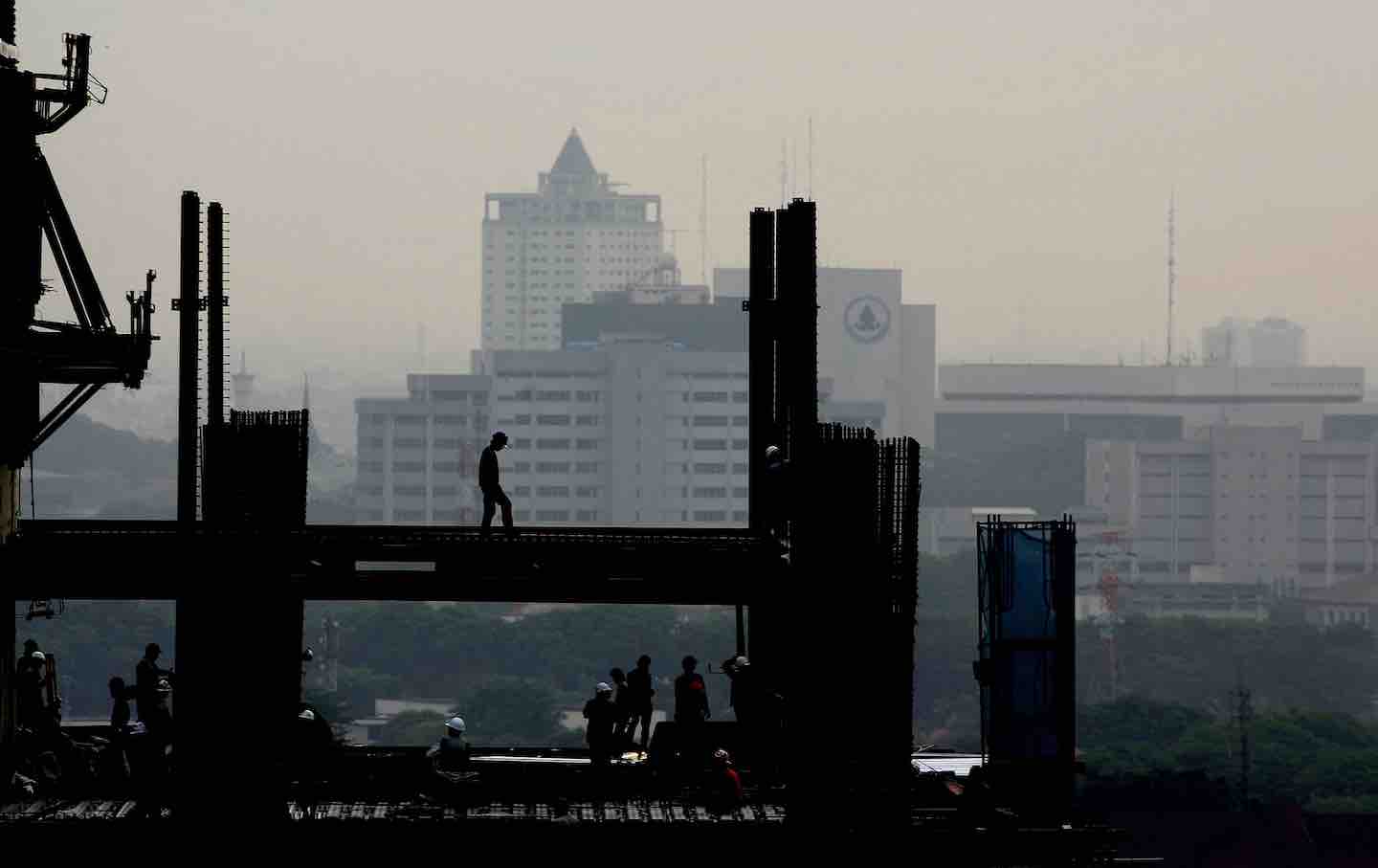
Books & the Arts / December 28, 2023 In, Contented Stories, Mostlya series of short experiences, the complexities of outlandish existence in the Southeast Asian country come into focal level. Downtown Jakarta, 2006.(Photo by Jewel Samad / AFP by map of Getty Images) Contented endings (or beginnings) don’t make for correct fiction, as the Indonesian

Books & the Arts / December 28, 2023
In, Contented Stories, Mostlya series of short experiences, the complexities of outlandish existence in the Southeast Asian country come into focal level.
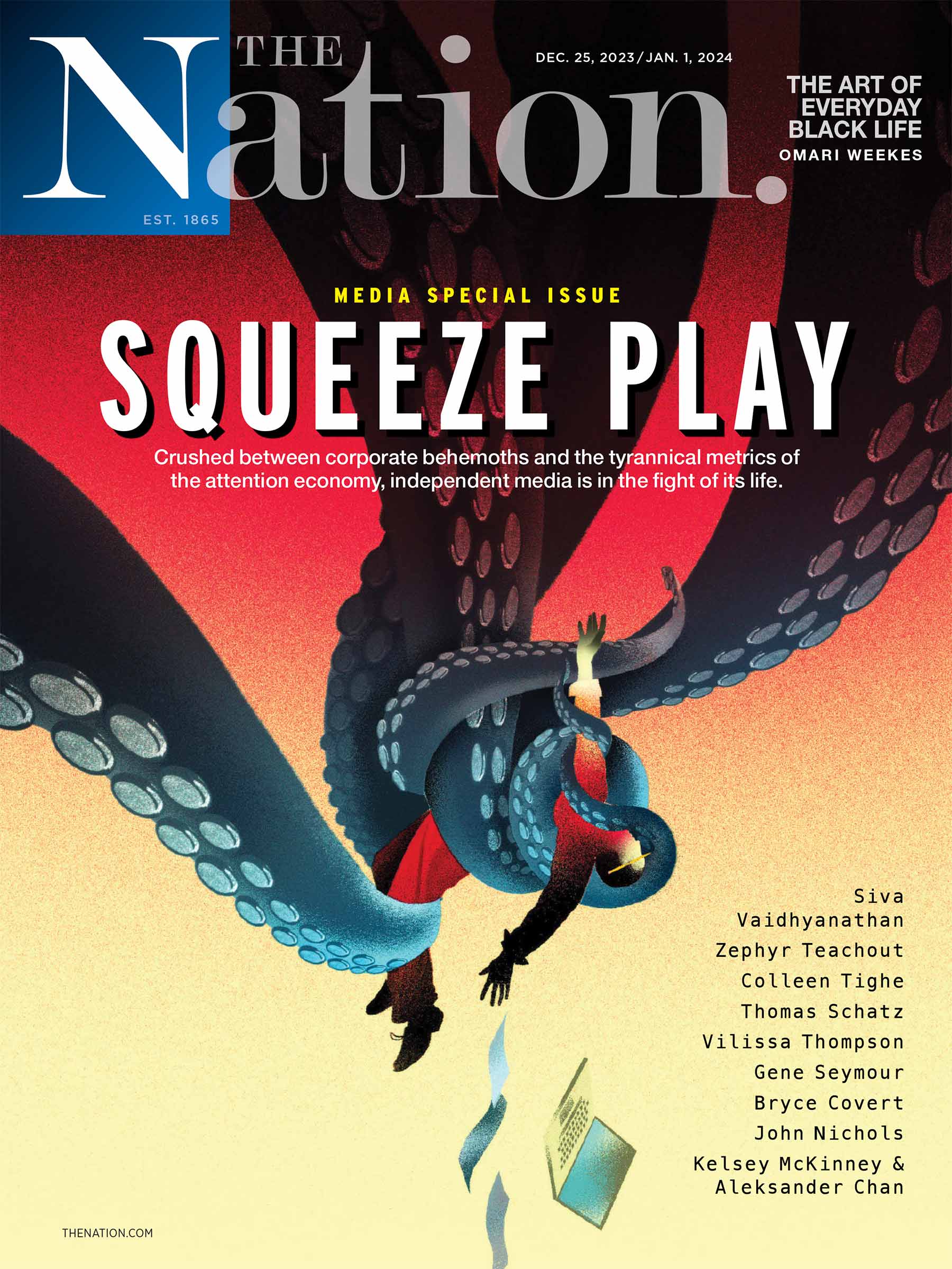
Contented endings (or beginnings) don’t make for correct fiction, as the Indonesian writer Norman Erikson Pasaribu is conscious of successfully. However Pasaribu doesn’t wish to give readers relate experiences both, especially about their chosen discipline: outlandish existence in Indonesia. As a substitute, their debut sequence, Contented Stories, Mostly, is written in a roguish, tragicomic tone. The 12 experiences in the e-book doc the topic of outlandish lives, especially of homosexual men, in as much as the moment Indonesia. The plots would possibly well perhaps simply be propelled by tragedy, but nobody—homosexual or straight—is diminished to or defined by trauma. Pasaribu treats their characters love mates, to be listened to and laughed at in equal measure. Even when the experiences are unhappy, as they on occasion are, Pasaribu refuses to give readers a front-row seat to homosexual suffering.
Books in overview
Contented Stories, Mostly
by Norman Erikson Pass; Translated by Tiffany Tsao Aquire this e-book
Most frequently, heterosexuals and their dangle-united states of americaare the butt of Pasaribu’s jokes. The humor in Contented Stories, Mostly targets social conventions that make outlandish Indonesians’ lives subtle, while showing that the country’s conservatism makes straight of us unhappy too. In one typical portion of dialogue, a straight character worries that a graphic unique just a few superhero who can change someone’s gender or sexual orientation is offensive. His homosexual interlocutor affords an reply that looks to channel Pasaribu’s beget dispute: “It’s satirical, honey. No longer to display absurdist. And the writer is trans. Humor’s her coping mechanism. Yeesh.”
Contented Stories, Mostly ranges across the Indonesian archipelago in all its ethnic and spiritual complexity, that comprises characters who come from little towns and from decrease-class backgrounds. They take public transit and dwell in dingy rooms, even in the occasion that they’ve moved up a rung by migrating to the capital, Jakarta. Unfamiliar identification is layered upon many varied styles of marginalization in Pasaribu’s imagined world, correct because it is in this present day’s Indonesia.
As a homosexual writer from the Toba Batak minority and a Christian in a Muslim-majority country, Pasaribu has thought deeply about what it map for them to write down for both outlandish and non-outlandish audiences, in Indonesia and out of the country. Pasaribu’s poetry first introduced them acclaim when they won a poetry competition whisk by the Jakarta Arts Council in 2015. The poems seemed as Sergius Seeks Bacchus from the UK publisher Tilted Axis in 2019, followed by Contented Stories, Mostly in 2021 (which used to be printed in the US this summer). Both books had been translated by Tiffany Tsao, who finds ingenious systems to raise the ambiguity of Pasaribu’s sentences in Bahasa Indonesia, a language by which pronouns are no longer gendered. The prose isn’t showy, however the imagery is startlingly rendered in Tsao’s translation: “Bags under our eyes, sunless as burnt chicken pores and skin from the total melted evening-shift mascara and kohl.”
Pasaribu centers queerness while treating the happiness and interiority of their characters obliquely, by narrating from unexpected views: The protagonists are in most cases straight, supernatural, or non secular—in a single story, a nun; in a single more, a statue of Jesus that has fallen under a mattress. Such various narratives stamp that outlandish existence in Indonesia is defined as valuable by these different, outsider perceptions because it is by the experiences of outlandish of us themselves. Pasaribu is drawn to company and energy: If outlandish of us are suffering, they put apart a ask to, why is that so?
In “Metaxu: Jakarta, 2038,” a female narrator confesses to a priest the total sins she committed against her miniature brother, starting with the time she threw an empty cough syrup bottle at him, which shattered and left him in part deaf in a single ear. Her different sins: laughing at her brother as he mourned their late father, who committed suicide; arranging a secular funeral for him, despite her brother’s insistence on a non secular burial; mendacity to her brother and refusing to back him when he wanted to ranking a job at the karaoke parlor where she works; jeering at him when he grew to was up there, alive to to immerse himself in the frequent songs that remind them both of their tiring dad. This litany of cruelties doesn’t encompass sneering at her brother’s crush on a boy named Ben. In her telling, she doesn’t care that her brother is homosexual; she used to be finest merciless to him for doing things that woke up feelings she had tried to quash or recollections of their shared previous she had tried to neglect.
Contemporary Anxiousness
These recollections are indubitably all she has left: Her brother ran away, and she or he has by no map considered him all over again. The story concludes with the narrator—now a student of philosophy—musing just a few brand unique technology that would possibly well perhaps erase nefarious recollections. It’s very no longer going, she thinks, on legend of the previous is section of her physique: “I’ve already tried erasing my recollections, but they like surfacing anyway. They’re fabricated from protein, and protein is forever.” She needs to neglect how her beget cruelty has left her with nobody, but she can be able to’t back but revisit what came about lengthy previously in her confessions. Pasaribu doesn’t ranking to the underside of her uncertainty; in this story and others in the sequence, they counsel that in most cases we want to raise ancient traumas shut.
In other locations, Contented Stories, Mostly invokes classic outlandish narratives such as popping out more as we command. Rejection is a recurrent theme, but primarily the most unsympathetic characters are by no map flattened into homophobes. Pasaribu is drawn to more nuanced responses to queerness, such as adverse ambivalence and casual callousness and the spoil they’ll reason.
Henri in “The Correct Chronicle of the Chronicle of the Huge” is a little-town boy from Sulawesi, in eastern Indonesia, who swings between self-significance and insecurity after he moves to Jakarta for faculty. Floundering in his history classes, he’s unsettled and intrigued by his classmate Tunggul, who’s as worldly and poised as a young particular person would possibly well perhaps furthermore be. (He reads Ryszard Kapuściński; he has opinions about Indonesian history; he makes wry, self-deprecating jokes about having one Catholic and one Muslim guardian.) Henri envies and desires to emulate Tunggul, for shallow and self-enthusiastic causes: He needs to give a blueprint shut to his grades and salvage himself a cooler female friend. The two boys was shut mates. At final, Tunggul confesses his feelings for Henri, who fumbles his response and says the corrupt thing. When Henri tells his cousin, who’s also homosexual, about Tunggul, the cousin parts out how arduous it must always be for Tunggul. Henri lashes out: What about him? “As if I have position items? Walk the cellular phone to my dad then, please. Oh wait, you would possibly well perhaps well possibly’t!”
After the rejection, Tunggul throws himself in front of a prepare and dies. Henri is misplaced in a vortex of guilt and despair. In doubt what to attain, he devotes himself to winding up Tunggul’s thesis, a historical legend of a Batak legend about the mammoth Parulian. This legend had introduced the 2 boys, with their shared Batak heritage, together. Henri splits up with his female friend and wanders North Sumatra on a quixotic quest to search out evidence of Parulian’s existence. At final, after higher than a year, Henri has an epiphany in an inexpensive motel: He can no longer write the history that he’d deliberate, but he can write an homage to Tunggul. Thru his creativeness, Henri finds consolation.
As Pasaribu requested rhetorically in a dialog with their translator, Tiffany Tsao: “Are you able to, as a outlandish, be blissful in the system the heteros are blissful in Indonesia?” The e-book suggests that happiness isn’t a assert that outlandish of us can attain on their very beget, especially no longer in a rustic where the rights of outlandish of us are neither receive nor identified by the assert. As a substitute, happiness is repeatedly short-length of time and contingent, on legend of it depends on relationships with different Indonesians, who feel uneasy when queerness brushes up against heterosexuality and its norms.
Success, both at home and out of the country, hasn’t contain out downsides for Pasaribu. They are arguably Indonesia’s most visible outlandish writer, which has attracted unwelcome attention such as on-line bullying, as they’ve mentioned in interviews. Pasaribu’s experiences gesture at the country’s postcolonial politics, but flippantly. Most frequently they invoke pivotal historical moments or prominent figures to make a droll story. (In “Welcome to the Department of Unanswered Prayers,” there would possibly well be a comedic riff on the phrase “Indonesia is at a crossroads” that pokes enjoyable at hackneyed journalese just a few rustic that, in the eyes of the West, is in a fixed assert of disaster.) Pasaribu is also drawn to interrogating how outlandish of us from the International South with few privileges would possibly well perhaps furthermore be blissful against the possibilities. Contented Stories, Mostly reveals that the successfully-being of outlandish of us is correct as crucial for Indonesia’s future as the political needs which would possibly well perhaps be more visible in the general public sphere.
Well-liked
“swipe left under to be taught about more authors”Swipe →
Pasaribu sees families as the map where outlandish happiness would possibly well perhaps thrive but correct as typically is stymied. Quite loads of the families in Contented Stories, Mostly are damaged and unconventional, but they adapt and accommodate. Unruffled, relationships buckle, even lunge, for disaster of what little-minded neighbors will notify. Pasaribu has a steady assert for older female characters: They self-replicate and have an opportunity at redemption. Furthermore they are the sequence’s designated comedians. Tula, the nun in “Ad maiorem dei gloriam,” ruminates on the outcomes of staying overnight with Yohannes, the homosexual single father she has befriended. She envisions scandal followed by catastrophe if it comes to be identified that nuns are working far from her convent. (She is the 2nd to abscond.) “The realm already has ample single men; agree with what a tragic scenario it would possibly well perhaps well be if Christ joined their ranks.”
In “Our Descendants Will Be as A mammoth quantity of as the Clouds in the Sky,” the penultimate story in the sequence, Leo and his husband Thomas dwell with Leo’s mother, Mrs. Siahaan, a self-described “rational, intellectual lady” who believes she’s no longer homophobic even supposing she refused to back her son’s marriage ceremony in the Netherlands. Even when Mrs. Siahaan tolerates Thomas, she doesn’t worship how he performs his filial tasks toward her. As Pasaribu writes:
She didn’t abominate Thomas. She by no map had. However deep down there used to be some section of her that didn’t wish to let Thomas revel in himself too valuable. His arrival had absolutely made it very no longer going for her to dwell love everybody else.
Despite her disdain for Thomas, Mrs. Siahaan has was nervous that her son’s marriage to him has hit a rough patch. About a months earlier, Leo and Thomas returned from India, where a surrogate had given beginning to their son, Jeremy. Mrs. Siahaan snoops for clues in Leo and Thomas’s room and finds several: a e-book on coronary heart disease, a draft of Thomas’s unique, a series of pornos, and—by hook or by crook—Thomas’s diary. Riffling by it, Mrs. Siahaan deduces that Thomas is tormented by coronary heart disease and becomes terrorized that he’ll die, leaving Leo and their unique child son alone.
The fact is worse than she imagined, though. By eavesdropping on the couple, Mrs. Siahaan learns that it is her grandson who’s in unhappy health; Thomas had saved the diagnosis a secret. The two men have reached an impasse: Leo feels betrayed, while Thomas is drained of seeking to delight no longer finest Leo but his mother too. It’s her fault, Thomas says, that they felt compelled into having a toddler. Thomas publicizes he’s transferring out. Mrs. Siahaan can’t beget what she hears.
In her son’s existence, she used to be nothing however the root of the topic, a total tree of complications. Hadn’t she finest ever wanted the categorical for him? Even when, she needed to confess, she in most cases felt perplexed. All the pieces in existence modified so fleet!
The story ends on this stamp, with Mrs. Siahaan’s skill to conception clearly the spoil she has triggered retaining out the likelihood that she’s going to change. That Mrs. Siahaan, Leo, and Thomas are wealthier than the total different characters in the sequence—they are trained, they budge, they dwell in a two-story home–suggests that obvious discipline cloth prerequisites make happiness more doable for some outlandish of us in Indonesia than others. Money and privilege, which allow Leo and Thomas to marry in the Netherlands and rent a surrogate in India to endure their child, can buffer about a of the bigotry and anguish. However even in this story, primarily the most hopeful of the sequence, Pasaribu underscores that happiness springs from the selections we make in our intimate lives.
Bryony Lau
Bryony Lau researches and writes about politics, migration, and wrestle in Southeast Asia.
The story you correct read is made that you just would possibly well perhaps well possibly judge of by a devoted community of Nation reader-supporters who give to spice up our progressive, self sustaining journalism. A generous supporter has agreed to compare all donations as much as $100,000 from now till the cease of the year. Label a contribution outdated to 12/31 and double your impact. Donate this present day!