Rescuing a Closed-Loop Geothermal Plot
MARTHA’S VINEYARD, MA — This geothermal rescue used to be for a closed loop geothermal machine that used to be severely overheating at some level of the cooling season. This methodology had ten vertical loops that served 11 heat pumps in three houses. Loop temps climbed and climbed at some level of the summer season
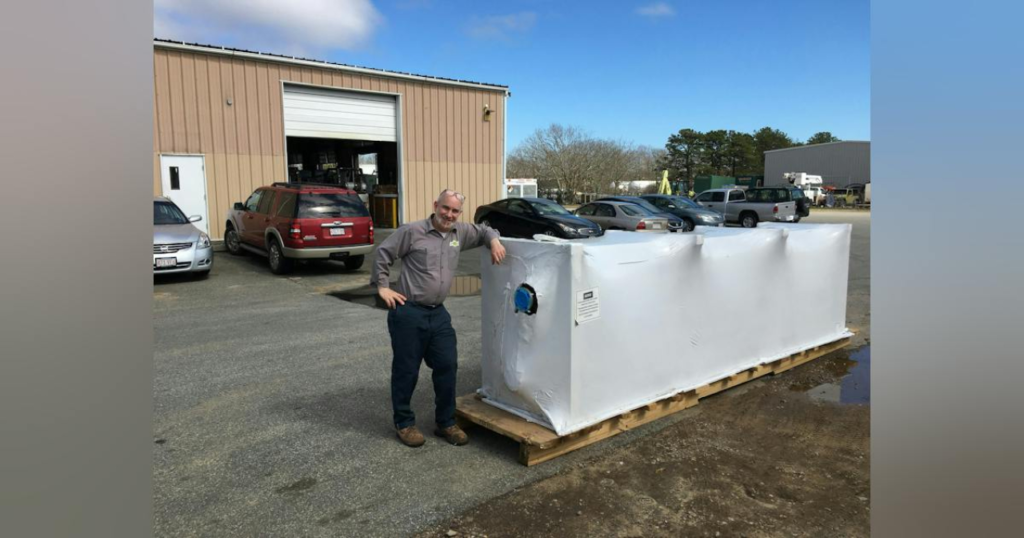
MARTHA’S VINEYARD, MA — This geothermal rescue used to be for a closed loop geothermal machine that used to be severely overheating at some level of the cooling season. This methodology had ten vertical loops that served 11 heat pumps in three houses. Loop temps climbed and climbed at some level of the summer season till the heat pumps tripped on excessive stress faults—the loop had hit 110° F. Our activity used to be to lengthen the cooling capacity and restore cooling to the three houses connected to this machine.
As an experiment, we flushed out the hot geo water with icy nicely water at 50° F and we had been ready to accept one other week of operation earlier than loop temps hit 110° F all another time. Clearly, the bottom temps had been very excessive and would possibly perchance well also not take in to any extent extra heat from the geothermal machine.
Altering Times
A geothermal machine’s prolonged-term success depends on a balance between heat extraction and warmth rejection. The three houses old style boilers to heat their swish floors within the iciness, so heat used to be never extracted from the geothermal field at some level of the iciness. This increased the probability of heat saturation of the geothermal field over time of operation.
Nelson Mechanical Assemble
Moreover, the fashioned geothermal machine used to be designed for a cooling setpoint of 76° F. This intended that the size of the geothermal field used to be reasonably modest. This used to be not queer on the Vineyard for that generation when there used to be an expectation that homeowners would worship the ocean trudge for cooling.
However, the younger generation that now old style the houses wanted worthy decrease cooling setpoints… we recurrently saw occupants setting thermostat setpoints between 65° F and 72° F. Cooling the houses to 72° F or 70° F used to be a fight for both the surface geothermal field and the ageing R22 geothermal heat pumps.
All over the old summer season, we had seen the heat pumps run off on excessive stress faults as a result of the geothermal water temperature used to be too excessive at 105° F. Clearly, realistic ground temps had been rising, and we had been shifting into the awful route.
Thought of Stream
There had been two instructions to steal to accept to the underside of this bid (besides telling the youngsters to switch away the thermostats put to 76°!)—add more closed loop geothermal wells or install a fluid cooler. Each and each instructions will doubtless be efficient in dropping the temperature of the geothermal loop water, nonetheless a fluid cooler became out to be less invasive, more straightforward to place, and within the spoil more cost efficient.
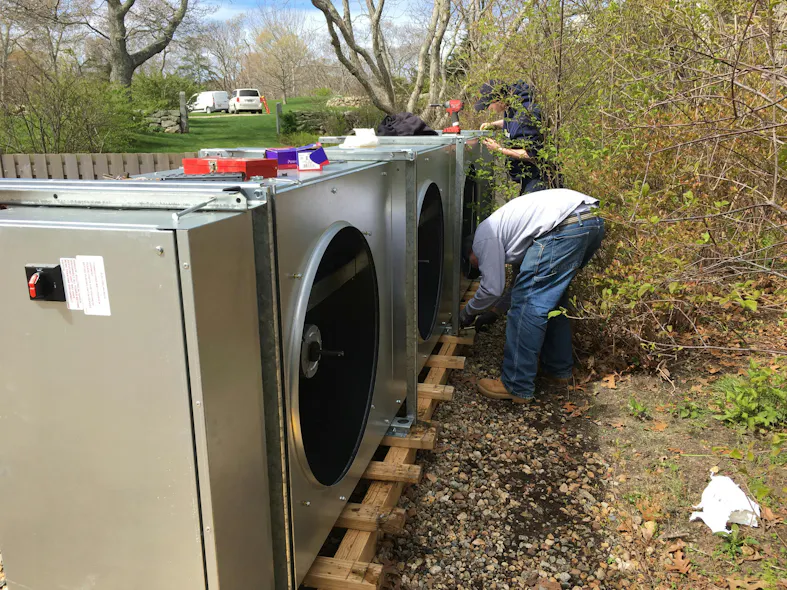
We chose a dry cooler as a result of there’ll doubtless be less annual upkeep. We sized it at 25 tons in converse that it would possibly perchance perchance perchance also deal with the total cooling load of all three houses within the match that the vertical geothermal loops had been to accomplish a leak.
Nelson Mechanical Assemble
Nelson Mechanical Assemble
Nelson Mechanical Assemble
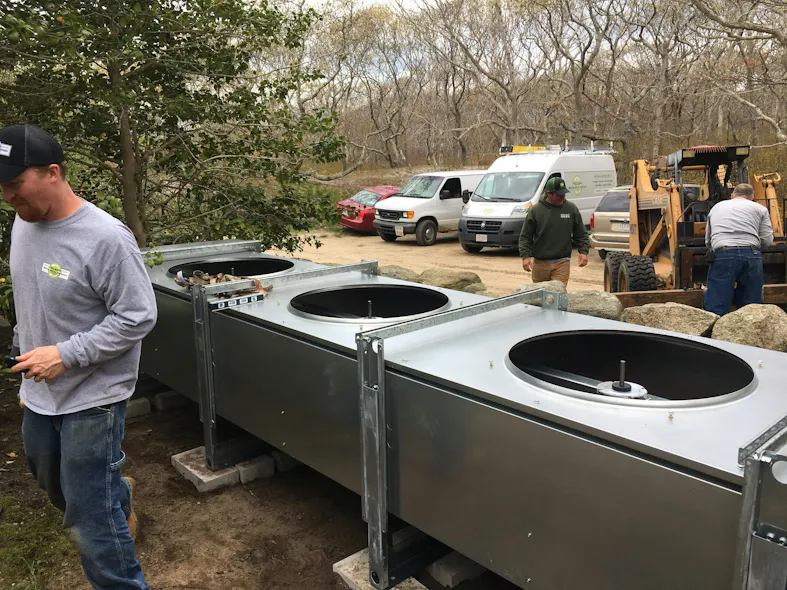
The fluid cooler we chosen had three cooling followers with variable tempo drives that would possibly perchance well also modulate basically based totally on loop water temperature. Thanks to the coastal atmosphere, we specified solid copper fins (would possibly perchance well also as nicely had been solid gold—this added one other $20,000 to the payment of the unit).
Set up
Our subsequent activity used to be to combine this fluid cooler with the prevailing geothermal machine. We had been ready to stumble on the unit within the help of the Carriage Home (usual of us call that a garage). We had been ready to join the fluid cooler thru closely spaced tees to the main geothermal loop that connected the Main Home and the Carriage Home.
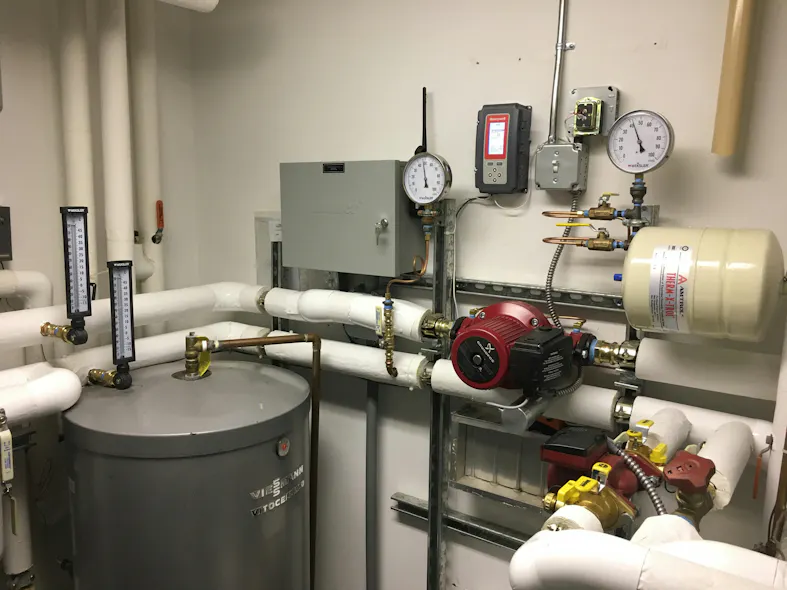
Throughout the Main Home, we needed to remodel the geothermal piping advance the loop circulators to accommodate the added waft needed for the remotely located fluid cooler. The loop circulators would send waft to both the main home heat pumps and the fluid cooler balanced with Victaulic balancing valves.
Nelson Mechanical Assemble
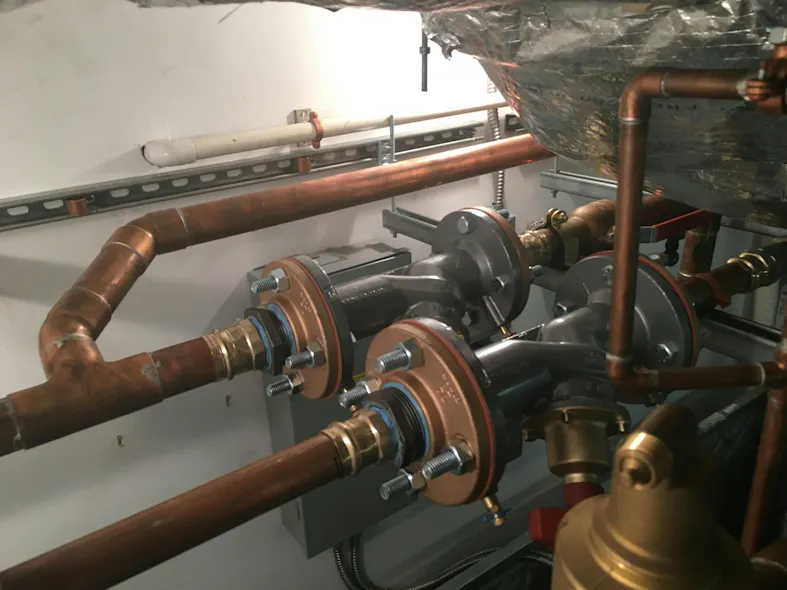
Though it used to be an even footprint we had been ready to mount both balancing valves for easy accept entry to and carrier; the balancing valve on the left used to be for the main home heat pumps and the balancing valve on the fine used to be for the fresh fluid cooler. (55 gpm and 40 gpm respectively). We also installed a booster circulator on the fluid cooler loop to lend a hand with the 40 gpm waft.
After we got the fluid cooler, we opened it up for inspection—no damage to the fins used to be stumbled on. This fluid cooler weighed 1,300 kilos dry.
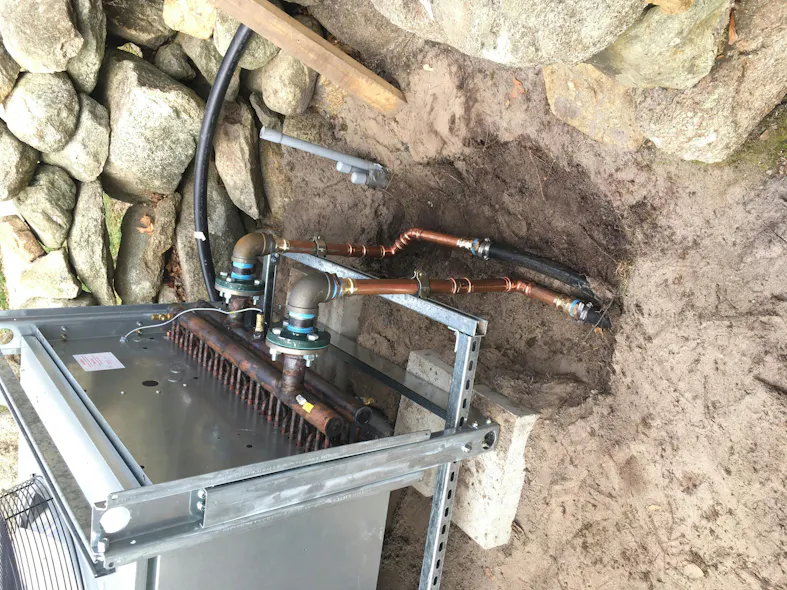
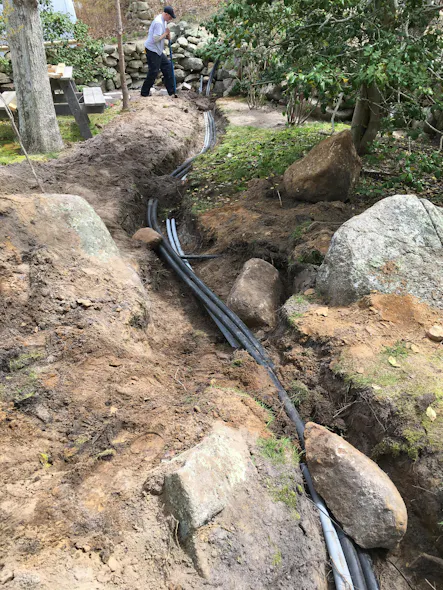
We installed 1-1/2″ HDPE nicely pipe supply and return traces from the help of the Carriage Home to the distant space of the fluid cooler. We ran copper traces thru the aspect wall of the mech room and transitioned to the nicely pipe under grade.
The fluid cooler used to be about 80 feet from the help of the Carriage Home, so we needed to size the fluid cooler circulator pump for the friction lack of the pipe and the fluid cooler.
Closing Steps
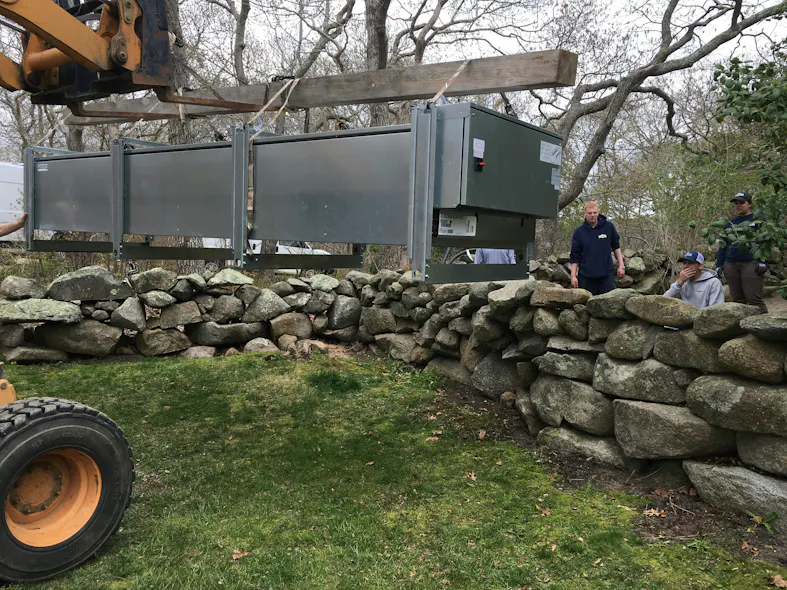
To prepare the fluid cooler for the switch to its closing space, we removed the adjustable legs and three followers, motors, and fan guards. We then old style a Bobcat to rigorously decrease the fluid cooler into its upright plot.
To present the foremost rigidity at some level of the transport to its closing space, we positioned a 16-foot-prolonged trees all the design thru the tip of the fluid cooler and assembled ratchet straps to the trees.
We carefully lifted the fluid cooler and adjusted the ratchet straps to invent determined that the unit used to be not sagging or bowing. The fluid cooler itself used to be with regards to all copper inner and any tweaking of the alignment of the physique would end result in a permanent deflection. This we very worthy wanted to elevate away from as it would possibly perchance perchance perchance end result in broken braze joints and fan clearance disorders.
Our Bobcat operator carefully crept forward with the fluid cooler trying to prick help swinging and jerking of the fluid cooler / trees meeting.
Whereas the fluid cooler used to be being rigged and slowly transported, the NMD team used to be carefully leveling the concrete blocks that the fluid cooler would sit on. A lot of measurements had been made to invent determined that the installation of the fluid cooler shall be accomplished in a single switch.
The switch slowed because the Bobcat, fluid cooler, and trees approached the weak stone wall. We weren’t allowed to switch any stones—they had been positioned there help within the 1700s!
The serious fragment of the switch used to be impending as we began to steal the fluid cooler above the stone wall. We made huge measurements of the attain of the Bobcat’s forks at assorted elevations to invent determined we would clear the stone wall and bear room to reattach and adjust the increase legs.
Nelson Mechanical Assemble
Nelson Mechanical Assemble
Nelson Mechanical Assemble
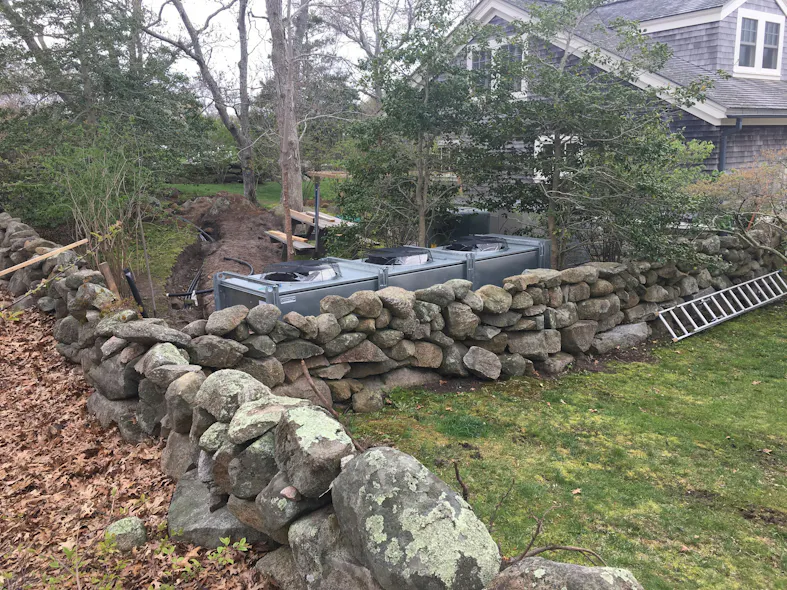
The fluid cooler cleared the wall, and we lined it up with the touchdown pad and reattached the legs.
Once the legs had been bolted on the coolest peak, we diminished the fluid cooler onto the concrete blocks and we unstrapped the prolonged wood trees.
We carefully measured the fluid cooler and skedaddle that there used to be no deflection within the physique and the tip and sides had been level and plumb—no damage to braze joints or seams.
Ample room used to be left between the wall and the cooler to permit planting of shrubs and bushes to extra hide the unit from the driveway.
We assembled a framework of strut to increase the provision and return connections on the fluid cooler, then we made the closing connections to the 1-1/2″ plastic poly supply and return pipes that came from the Carriage Home. We accomplished the re-piping of the Carriage Home mechanical room to accommodate the provision and return pipes from the fluid cooler and join to the surface geothermal loop.
We adjusted the three cooling followers in a thermal cascade—every fan would flip on if the water used to be 2 degrees hotter than its setpoint. We stumbled on that the machine used to be ready to speed the employ of only two followers for a lot of of the summer season attributable to our generous sizing of the fluid cooler.
We examined operation and landed at a geothermal loop temp of 90° F with all eleven heat pumps within the three houses at a cooling setpoint of 65° F. No more cooling complaints!
Brian Nelson is a Grasp Plumber and co-proprietor of Nelson Mechanical Assemble. Since 2004, NMD has been a “inexperienced” mechanical contractor specializing in energy- and water-efficient systems and serving the heating and cooling needs of the residents of Martha’s Vineyard.